
When you are going through an existential crisis, there comes a point when you begin to notice different branches, different types and expressions of all the problems rumbling around inside of you. They are not all the same, each person experiencing their own unique kind of crisis. Some come in midlife, some after a traumatic event, some not until much later once a person retires and has time to reflect on their life only to realize things did not go as well as they had hoped after all.
When I was younger, “having an existential crisis” or midlife crisis was the punchline to a joke on sitcoms. I thought people… I don’t know… simply went a little wonky for a while, made bad decisions. Bought a boat. Got divorced, got liposuction. There was no explaining it. People had affairs, spiraled out, remarried someone with whom they were incompatible mentally, emotionally, sexually, socially, but who… ya know… was simply different than their previous spouse. Having an existential crisis meant you were a bad parent or woke up some idle Tuesday and inexplicably quit your job and moved to Tahiti, but we were all fine with it and could laugh about it because “they’re just having a midlife crisis.” (cue audience laughter)

I didn’t realize until I went through my own mental, emotional, existential, midlife crises (plural) that they are different. More complicated than that, even in their difference, there are different reasons why they arise and ways they are expressed. An existential crisis, by definition, should seem straight-forward. You get caught up in your head, thinking about your thoughts, thinking about the nature of your existence, and it all starts to tipple-topple over. There you are, my good sir, having an existential crisis. Why are we even bothering to explain this? It’s self-evident.
Only, that’s not how we understand them. Most of us are not philosophical enough to think about our thinking, and if we are, we run away from all that inner work once we feel the shadow of something scary. No, most of us have the concept of a sitcom in mind. And it never happens to us, but someone else. Over happy hour margaritas, we lovingly but condescendingly tell our friend, “Girl. You’re having a midlife crisis. I love that for you!” before returning to our normal, humdrum lives. Maybe we envy them. We envy their freedom. But it all feels so messy and complicated. We’re certainly not ready to blow up our whole life like they have. So we go about things, sighing and depressed, never recognizing we are having our own kind of crisis, a silent one albeit, but a crisis nonetheless.
One day you wake up, and you’re not sure what you’re doing, what the point is anymore of doing the things you’ve always done, and flip floop skeedle-dee-dee, you’re staring out the window at the nearest tree. Your mind wanders and you come to your senses, realizing you spent the last seven or eight minutes trying to figure out how fast you would need to be going, speeding in your car, when you hit the guardwall to be ejected through your windshield. What is the best bridge, like where could you do it so you’d be successful in killing yourself? After all, you think, you don’t want to be a vegetable halfway between the living and the dead.
You are miserable, trapped in the life you have made, and it’s not so much that you actually want to kill yourself so much as you just want to die because goddamn, another day of these feelings is enough to drive anyone to kill themselves. Right? C’mon, man. You know what I’m talking about here. Right, Bro?
You want to die because you know you’re not really living. Surrounded by stuff, by things, you have come to recognize that you have traded off a mausoleum of trinkets for actually being alive and enjoying it.

Someone I’ve known for years went through a divorce years ago and started getting into a lot of car accidents. “I just didn’t care,” he explained. “I mean, sometimes I thought about hurting the other person so I would slow down. I didn’t want to hurt anyone else. But self-preservation? No. I didn’t have that anymore. And I would be so ashamed. I would stand there, waiting for the cops or the ambulance and ask myself, you know, What were you thinking? and I can’t explain it to you. I can’t. I couldn’t even explain it to myself as it was happening, right after it happened, or years later.” At work, he was unfulfilled. He worked on his house, which he got in the divorce, but it all felt so meaningless to work on something that he had wanted to build with his ex-wife.
He is still working on that house, three decades later.
Maybe your own crisis is not that extreme. Not yet, anyway. Maybe, like me, you find yourself at the end of the day getting in that same car – the one you imagine dying in – and realize your entire day was on autopilot. You can’t actually explain, not even to yourself, what you did today. I teach, and I would sit in my car at the end of the day unsure about what I even lectured on, how I answered questions, what deadlines were extended for students who were struggling. Did I eat lunch, even? Did I finish my coffee? What the hell did I do with the last eight hours? Then I would turn the ignition and somewhere in the next hour of traffic, begin to piece my day together like an incomplete jigsaw puzzle. I would walk in the door, my spouse would ask how my day was, and all I could say was “Fine” because I guess it was(?). After all, I didn’t jerk the wheel on the drive home. Not yet, anyway.
It’s taken time for me to come back from that point. To understand and sort through those moments to understand that one existential crisis is not like another.

In America, there is a lot of talk right now about the “male loneliness epidemic”, about the negative experiences people have when they go out on a date, about the changing attitudes toward parents and finances and jobs.
We are all, it turns out, in some sort of crisis. A crisis of attention, beauty, the need for love, social issues. It never ends. And it doesn’t help that Apple just upgraded to a new operating system that made the device you purchased two years ago obsolete.
Everywhere we turn, there is a new cure, a new word that tries to explain what we are going through, a new group to blame, another article behind a paywall, another email list we’re supposed to sign up for so we can fix our lives, a new gadget we “have” to get. Nobody wants to be a loser, after all. We surround ourselves with the carcasses and costumes of our former selves, never realizing how hollow we are inside our own bodies.

As someone who has crashed and burned a few times, or as I tend to say, “had more wardrobe changes than Cher, Madonna, or Taylor,” I think our sense of overwhelm comes from an inability to differentiate what it is we are going through. We don’t even know how to explain it to someone else. After all, our personal life is falling apart, but we’re still able to function. Like me, we’re able to go on auto-pilot for eight hours. We’re good at our jobs. But inside, we’re falling apart.
Here’s what I think: Our problems, whatever they are, overwhelm us based on the type of existential crisis we are going through at the moment. They are not all the same, and they are not mutually exclusive.
Different Types of Existential Crisis
Crisis of Meaning – Occurs when people feel that their life doesn’t have a purpose anymore. They may struggle to find a reason for existence or feel disconnected from their actions, questioning the point of life itself.
For me, this is the big one. This is why I can be good at my job, but feel unfulfilled. Whenever I got in the car at the start of the day, I checked out because I didn’t feel fulfilled. After a while, I felt like I wanted to die. I was “checked out” punctuated throughout the day with suicidal ideations, not because I actually wanted to die, but because I felt like I was wasting the life that I had.
Crisis of Identity – Those experiencing a crisis of identity question who they are and their role in the world. It can be triggered by major life changes like career changes, loss of a loved one, or significant milestones that disrupt one’s sense of self.
When my wife was pregnant, there were days when I could feel myself changing into something else. I would joke about it, that I was aware I was becoming a dad. What I really meant, as a practical example, was that I had a really large book collection and I felt like I was stealing real estate from my not-yet-born son. I was “Book Guy” with hundreds of books – so many that we were filling every available space in the house with more books. Before he was born, I sold a large chunk of my collection. It wasn’t a noble act (seriously, I’m not saying I deserve a medal), but it was a meaningful one. If I was not self-aware enough to know what was happening, if these events had happened just a few years earlier, I know I would have slipped back into a crisis because if I wasn’t “Book Guy” then who was I? In the same way, my wife collected wine for several years there and found herself selling most of them. We were, thankfully, able to talk about the sense of loss we felt in terms of our identity because big changes, the kind that change our perception of ourselves, are really quite hard even when they are positive changes.
Crisis of Morality – Typically felt by those in a helping or spiritual profession, failures of morality or belief are wide-ranging because one has, in a sense, betrayed their own identity and beliefs.
In 2006, I was working for a church when I began an emotional affair with my best friend’s wife. One afternoon in July, her husband – my friend – discovered us. It was in that moment that I… I don’t know, “snapped back to reality”? I felt so young, so stupid, where moments before I had felt so assured and certain in my choices. I felt dumb. But worst of all, I felt disappointed in myself in terms of the morality I held at the time.
As Canadian author Emily St. John Mandel writes in her novel, The Glass Hotel (2020),
“It’s possible to both know and not know something,” he said later, under cross-examination, and the state tore him to pieces over this but he spoke for several of us who’d been thinking a great deal about that doubleness, that knowing and not knowing, being honorable and not being honorable, knowing you’re not a good person but trying to be a good person regardless around the margins of the bad. We’d all die for the truth in our secret lives, or if not die exactly, then at least make a couple of confidential phone calls and try to feign surprise when the authorities arrived, but in our actual lives we were being paid an exorbitant amount of money to keep our mouths shut, and you don’t have to be an entirely terrible person, we told ourselves later, to turn a blind eye to certain things – even actively participate in certain other things – when it’s not just you, because who among us is fully alone in the world?
A few years later, at seminary, a different friend came to me in tears because his wife had been cheating on him. She was sorry, she told him. She wasn’t in love with the other person. She was genuinely apologetic when she confessed to him, but he knew he would never be able to forgive her. He knew about what I had gone through years earlier, and wanted to know what made me abandon my own morals. I bluntly told him the truth. Sometimes, good people do really bad things. They make bad choices. And there’s no explaining it except to say that, yes, it happened. Still, I explained to him, I was living proof of something. When we go against our own sense of morality like I had done, and like his soon-to-be-ex-wife had done, we carry the scars inside of ourselves. When I told him this, only a few years had passed. Now, I remain even more convinced. There is something so searing about going against our beliefs and morals that you spend the next decade wondering how you could betray your own ideals.
Crisis of Mortality – Characterized by an acute awareness of mortality, both one’s own and that of others. It can lead to fear, anxiety, or ruminative thoughts about the inevitability of death and the impermanence of life.
A few months before my grandfather died, he was picked up one morning by the police at 4am. He was, they said, walking along a country road in his underwear. We knew he had been having “senior moments” but, until my aunt had to pick him up and have him evaluated by mental care providers, our family didn’t know things had gotten that bad. Surrounded by the family, my grandfather was embarrassed and ashamed. He didn’t want to talk about with them, he said. One by one, family came and left until it was just the two of us in the room. Suddenly, everything he had been holding inside came rushing out and he burst into tears. He was, like so many people whose death is slow enough for them to see it coming, afraid of dying. Deeply – and I say this as a witness to its literality – terrified to the point of trembling. He was truly, truly afraid.
Of death itself? Of course. Of having not done enough with his life? That too. Of small failures as well as the big fuck-ups? Nailed it. That he had left the iron on? Yep. That he was losing his mind? Ding-ding. That, if there was (and maybe there wasn’t!) an afterlife, maybe he would go to the Bad Place instead of the Good. Of course. Because the crisis of mortality isn’t just about being afraid of death. It is also about the weight and merit of the life you have lived up to that point.
In fact, for many people, death is still a distant problem yet to be resolved. When my son was born, my own crisis of mortality took the form of wanting to make sure I built a college fund for him now. On my desk beside me, I have envelopes for letters I need to write him about My Hopes And Dreams for him, The Day You Were Born chronicle, and What I Want You To Know About Me. My own crisis of mortality is wanting my son to know who I am, even if I die tomorrow. We tend to dismiss those early signs of a mental health crisis as just being emotional, or not the “right” time and stage of life, but the truth is we can have a crisis anytime. Think about the child who has just come to accept that one day they will die, their dog will die, everyone they know and love will die. Tell me that is not a crisis of mortality! Or the time when your friend died in their twenties. Tell me that you did not question things then. We have these kinds of unresolved questions and anxieties and crises all the time, but we shove them down promising to deal with the “one day, some day” because we convince ourselves it isn’t a crisis, isn’t a big deal, and that we just need to move on.
Crisis of Freedom, Responsibility, and Choice – Those experiencing this crisis are ofren overwhelmed by the myriad of choices available in life and the inherent uncertainty in their outcomes. Additionally, the freedom of perceived choice can be heavy to carry as one may become weighed down by the responsibility and pressure attached to it. This can lead to a sense of stuckness, indecision, avoidance, and regret over paths not taken.
This kind of crisis, I think, defined my thirties. Like many other people, I was told I could do anything. I was raised with hundreds of options for sodas. Not exactly the coolest cat, I spent a lot of time at bookstores surrounded by thousands of reading options. Which was great, I mean, I certainly enjoyed the variety. But anyone with a streaming service knows that familiar feeling of overwhelm when given too many options.
Which sounds trivial. Until you begin to experience it.
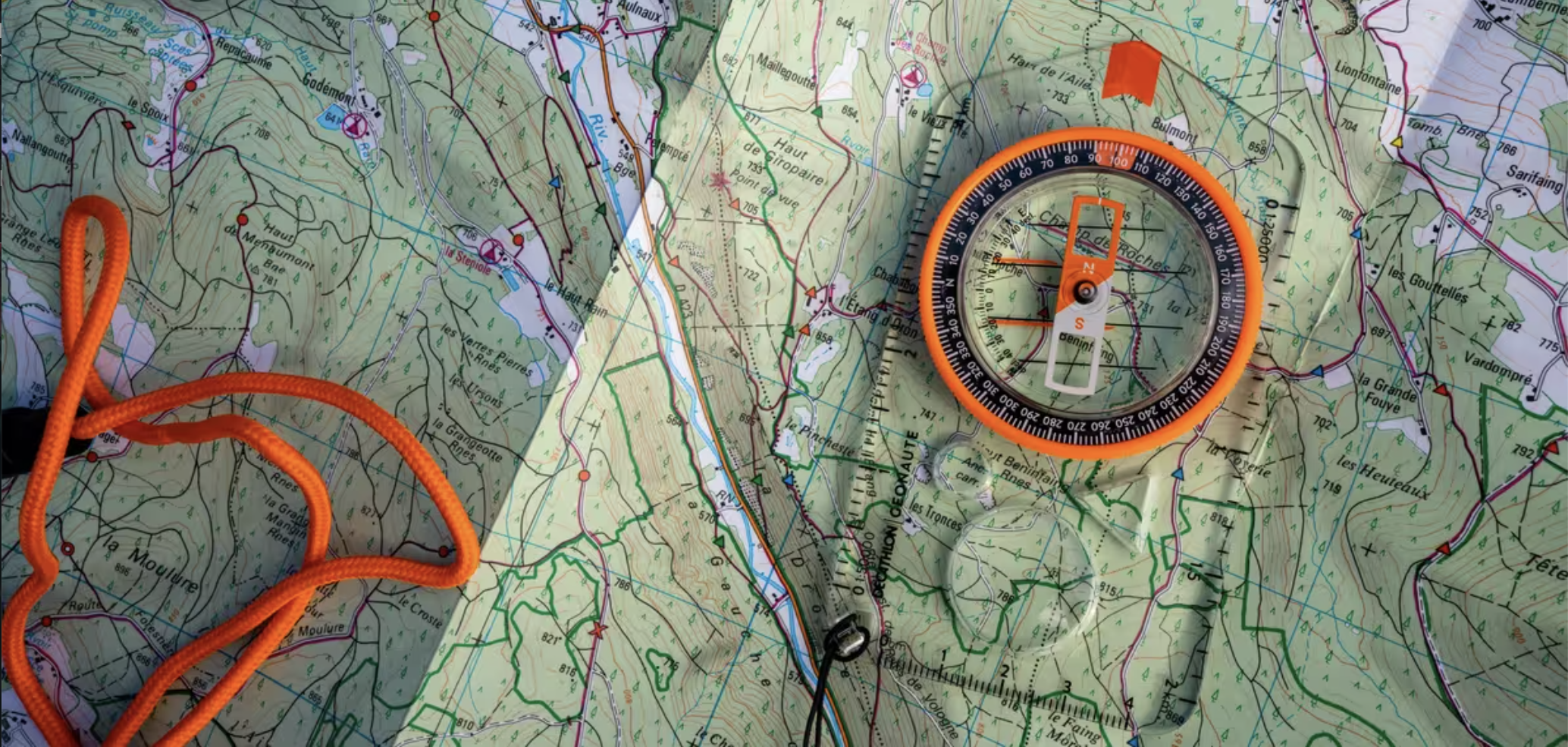
For me, this meant spending a decade entirely convinced I could nail the LSAT and go to law school.
Or get my doctorate in Theology.
Then again, I’d love to explore psychology some more. Maybe I should do that? Or pick up a few online classes on Digital Marketing?
I should finish my novel. No, wait. I should start that catering business I thought about last week when I was flipping through old cookbooks.
No. Wait. I should finish that writing project on American Evangelicalism and the impact of Televangelism, the one that explains the rise of Christian Nationalism and the influence of Donald Tru-
You get the point.
Turning and turning again in so many directions, you begin to lose that interal navigation system that you once had. Some options are good, some are great, but you’re no longer able to tell the difference because here comes another option flittering through your head. You get on a dating app and swipe past some amazing people because, again, your navigational system is so fried that you can’t even see it.
Here, I think we see a lot of the caricatures of the midlife crisis. You’re still you. All of these “strange” choices are still you, but without that inner core of knowing who you are, the choices seem random and disconnected to anyone who is witnessing you move through so much uncertainty. And, yeah. Sometimes they are that too. Sometimes your choices are random and disconnected, but you’re no longer sure and can’t tell anymore so you get defensive about the non-identity because you’ve already blown past a pivotal moment: You no longer care. After all, you’re free to do whatever you want anyway so who the fuck do these people think they are trying to define you and limit you? YOU CAN DO ANYTHING, BITCH. ANYTHING. THERE ARE NO LIMITS!

Crisis of Isolation and Connectedness – Involves feeling fundamentally alone in the world. This can be onset by the death of a loved one and the awareness that no connection is forever. Alternatively, this crisis can arise from a profound personal experience that is unique to each person, realizing that their subjective experience in the world is their alone.
It makes me think of that quote by Mother Teresa, “The most terrible poverty is loneliness, and the feeling of being unloved.” Or the pandemic. Coming out of the Covid-19 Pandemic in May of 2023, many reported feeling lonely. Although we went through the same global events, the same timeline, we experienced so much of it privately. We coped privately, siloed, and isolated in ways that we were not prepared to do. In my immediate family, my wife and I drove North to her family’s farm and stayed there for three months. My mother and brother, meanwhile, continued to work outside of their home because they were deemed essential workers. Much of their work, despite being in the same building as co-workers, took place at opposite ends of their building in isolation.
Another example would be a friend of mine who recently had a hysterectomy. Although she moved in with her sister to recover, her sister has two kids. There is a sense of loss that even someone as loved and close as her family simply cannot understand. And it’s complicated, because she loves her family but, having moved in with them, has become even more aware of what she has lost. Despite being so close to those she loves, the loneliness is intense.
Unpacking This
For months now, I have found myself humming a tune. “I don’t care anymore. I don’t care anymore. I don’t care about anything anymore.” A friend of mine wrote a song with that chorus over a decade ago, and I think about it all the time. She wouldn’t even recognize me now, I bet. We haven’t talked in over a decade. But she used to play at this restaurant close to where I lived and I would walk past sometimes and hear her singing; sometimes I would smoke clover cigarettes because I thought they tasted good or when my depression convinced me that cancer might be a fun way to die. She would sing this song, kind of sing-song really, “I don’t care anymore. I don’t care anymore. I don’t care about anything anymore” and, more than any (far) more popular song on the radio from that time, this song came to define that period for me. I stopped caring about many of the things that felt important. I stopped caring about the things my parents encouraged me to do. Eventually, I stopped caring altogether. What I was experiencing then were compounding crises, not one or even two, but a complete collapse of who I was and the life I thought I wanted to live.
In the decades that followed, I found that song that my friend wrote to be a recurring melody to the crises, plural. Sometimes, I would simply wake up mumbling through the chorus. Once, I walked out on a first date as soon as I realized what I was humming; I didn’t even finish my drink. I hurt people I cared about, and was careless with those I didn’t, and throughout it all I would have carefully explained that, no, I wasn’t an asshole. I just didn’t think I mattered. And if anyone put stock in me or the things I did, said, or even shared in the small things I found joy in, well that was their problem and not mine. All of us will die, I would have told you. You will. I certainly will. And in the final analysis, the people we matter to will die in their own way as well, all of us forgotten like ash on the altar of tomorrow.
While I find myself still humming that tune, “I don’t care anymore. I don’t care anymore. I don’t care about anything anymore,” I’m not sure it’s true. Or that it ever was true. Not for me and certainly not for my friend, the songstress. She, it turns out, is a nurse now. She’s spent years helping, healing, and bringing joy to the disconsolate. Despite writing those words and that melody, she really did care a whole awful lot about herself, the people around her, and the world she lives in.
It turns out, whatever we tell ourselves in the midst of crisis is the fevered rambling of a mad mind allowed to hold the microphone inside our head.
 Randall S. Frederick